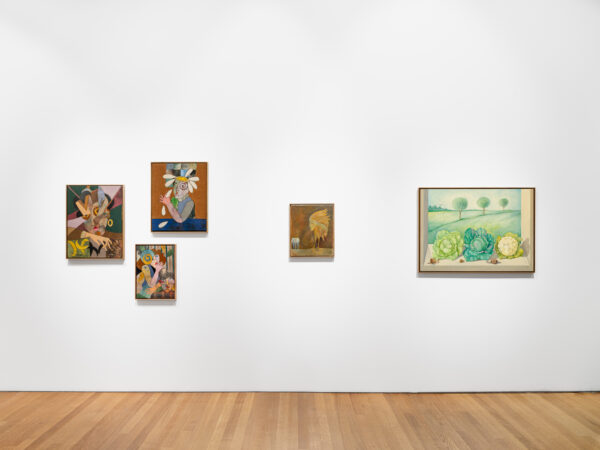
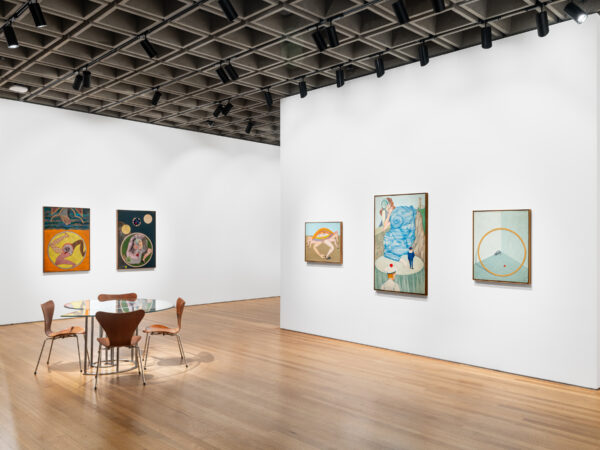
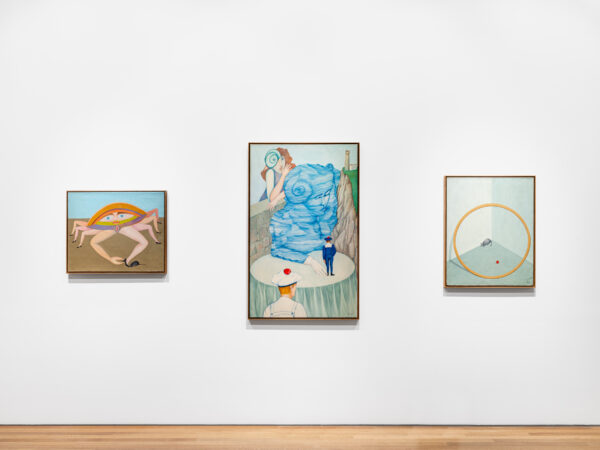
Text
BONA DE MANDIARGUES SOLO PRESENTATION
INDEPENDENT 20TH CENTURY | BOOTH 201
SOTHEBY’S AT THE BREUER | NEW YORK | 24 – 27 SEPTEMBER
My research is alchemical… I want to make gold starting from excrement.
– Bona de Mandiargues, 1977
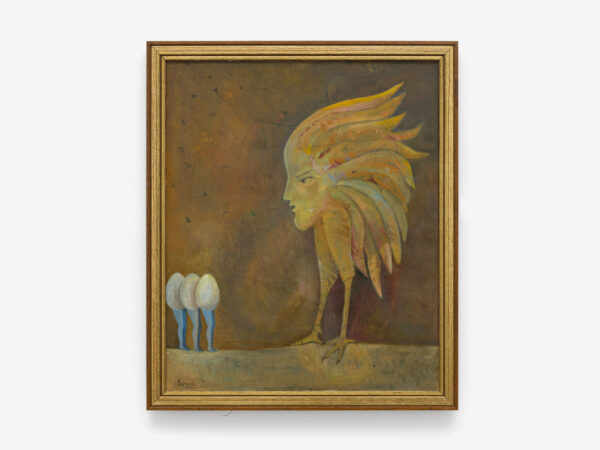
Bona de Mandiargues (b.1926, Rome; d.2000, Paris), known as ‘Bona’, was long overlooked. Recently she has received renewed international attention following her inclusion in the 60th Venice Biennale, Foreigners Everywhere (2024), and Surréalisme at Centre Pompidou, Paris (2024). Her first institutional retrospective was at the Nivola Museum in Sardinia (2022), and a new English monograph, published by Eiderdown Books in September 2026, coincides with our solo presentation at Independent 20th Century. Together with figures such as Leonora Carrington, Meret Oppenheim, and Dorothea Tanning, Bona is now regarded as one of the key protagonists of female Surrealism.
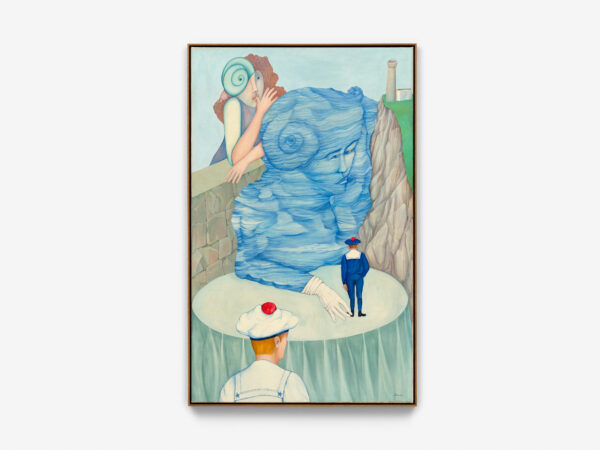
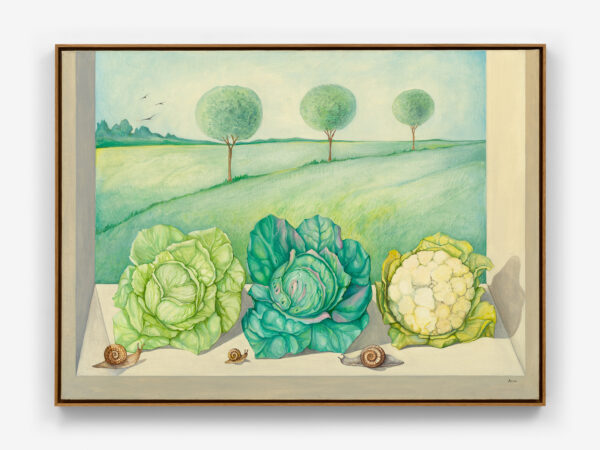
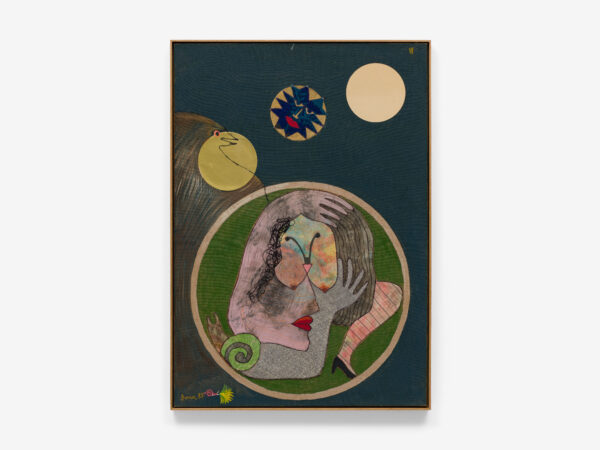
Although Bona emerged from Surrealism, she moved far beyond this. She developed her own unique language, a personal cosmology in which painting, stitching, and cutting become acts of psychological and spiritual transformation in her pursuit of the meaning of the ‘self’. Across five decades, her work explored this quest through the metaphor of the androgynous and hermaphroditic snail. Bona closely identified with this animal, which symbolised many of her preoccupations with opposites, contradictions, fragmented identity, and sexuality. As she wrote: ‘Constantly torn by the desire to escape and the protective need to stay at home, I envied the privilege of the snail who can move around with his house. A lunar and moody animal, it symbolises movement within permanence. Perhaps because of this, I began to identify with him… By embracing the shapes of the spiral, I’m embracing the very structure of the universe.’
Born Bona Tibertelli, the artist spent her childhood on a large estate near Modena, where she was drawn to places where she could lose herself: attics, cellars, stables, fields, and orchards. After the death of her father, she moved to Venice to live with her uncle, the Italian painter Filippo de Pisis (b.1896; d.1956), who she described as a great influence and mentor, teaching her to use her ‘inner eye’. In Venice, Bona was introduced to influences she carried with her throughout her career: from the early Christian mosaics of Ravenna to Sienese paintings and the work of Giorgio de Chirico. In 1947, Bona moved to Paris, where she entered André Breton’s Surrealist circle and met artists including Max Ernst, Hans Bellmer, Leonor Fini, and Man Ray, who photographed her on several occasions. ‘Thanks to the Surrealist group,’ she reflected, ‘I was able to see more clearly in myself what I had been trying to express.’
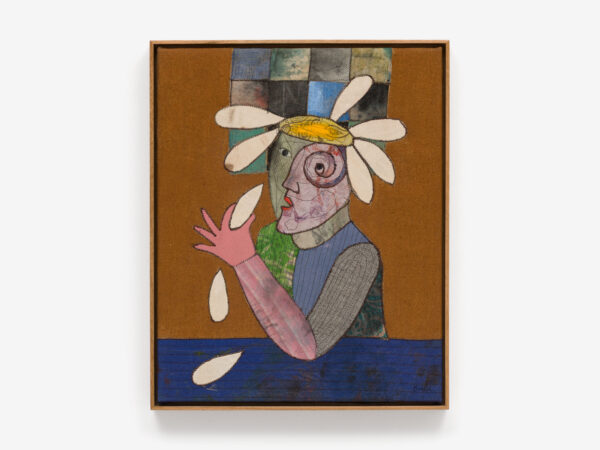
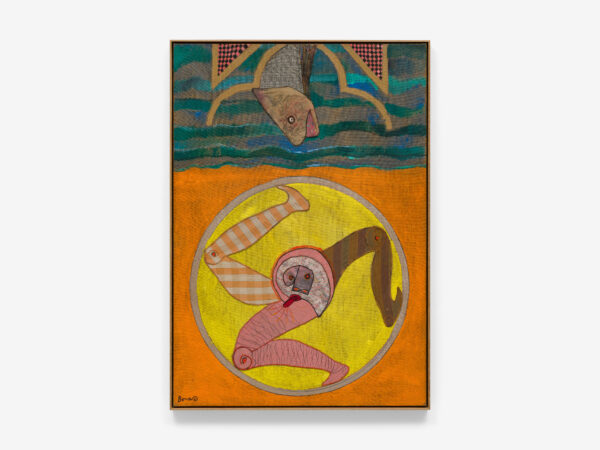
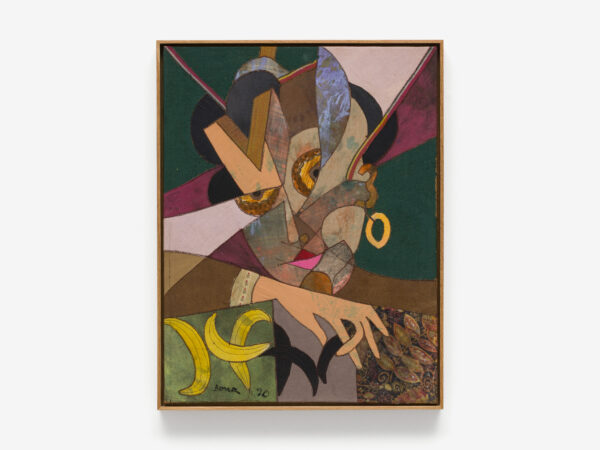
In 1948, Bona travelled to Mexico with her husband, the French writer André Pieyre de Mandiargues. Breton described Mexico as ‘the most Surrealist country in the world’. Bona was inspired by its colours, its pre-Columbian history, and local Indigenous weaving, and entered a new artistic phase, abandoning paint in favour of fabric and collage. Taking scissors to her husband’s old jackets, Bona ripped out and disassembled the linings, which Italian and French tailors refer to as l’anima and l’âme (soul). The resulting collaged and sewn fabric images, which she referred to as ‘ragarts’, read like paintings, pieced together with a sewing machine and also by hand. ‘I chose these very humble materials… I flipped inside out the vests of men to get to the heart of their armour, of their protection.’ Bona regarded sewing, assembling, and cutting as central to her art, stating that scissors were ‘as important to her work’ as brushes. In the assemblages, she creates an emotionally rich universe of threads and wefts, a process of making she described as ‘close to that of a witch working her spell’.
Works


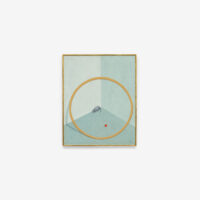
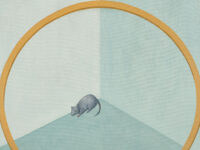


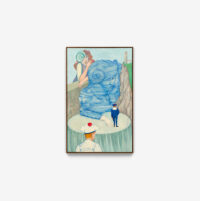
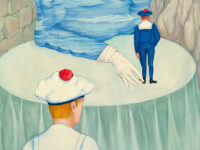


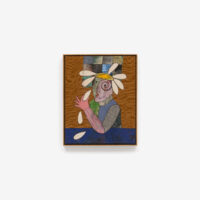
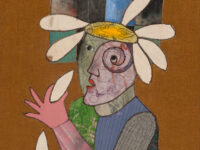


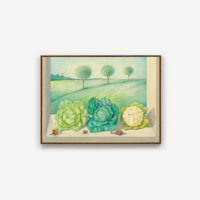
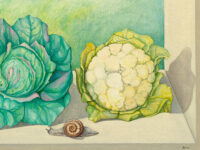


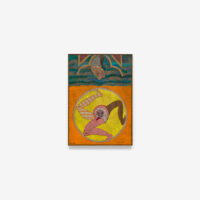
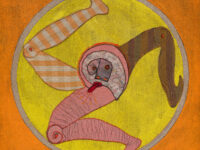


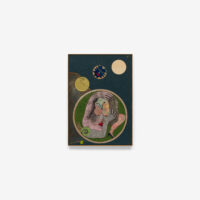
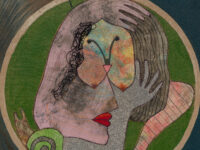


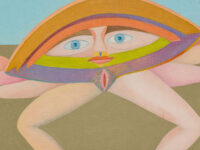


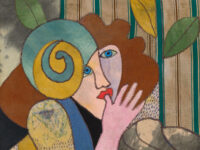


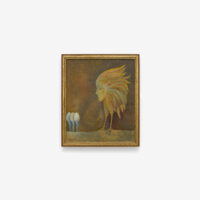
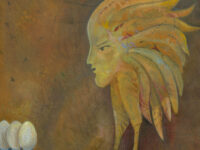


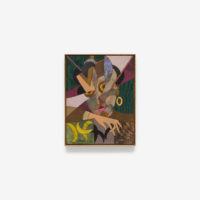
-
![]() Untitled, 1976
Untitled, 1976 -
![]() Untitled, 1979
Untitled, 1979 -
![]() Untitled, 1982
Untitled, 1982 -
![]() Untitled, 1982
Untitled, 1982 -
![]() The Fire - A Tribute to John Donne (Le Feu - Hommage à John Donne), 1985
The Fire - A Tribute to John Donne (Le Feu - Hommage à John Donne), 1985 -
![]() The Earth - A Tribute to John Donne (La Terre - Hommage à John Donne), 1985
The Earth - A Tribute to John Donne (La Terre - Hommage à John Donne), 1985 -
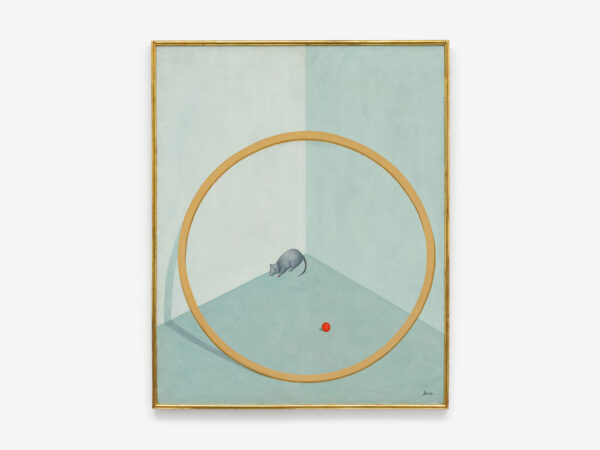
![]() The Jellyfish Water Rat (Le Rat D’eau de la Meduse), 1985
The Jellyfish Water Rat (Le Rat D’eau de la Meduse), 1985 -
![]() Untitled, 1986
Untitled, 1986 -
![]() Straight “Through” Rugged Terrain (Recta “Per” Derupta), 1987
Straight “Through” Rugged Terrain (Recta “Per” Derupta), 1987 -
![]() Josephine Baker, 1987
Josephine Baker, 1987


Installation