


Eileen Agar Parodies the Surrealist Muse
Juliet Jacques, Frieze
June 2021

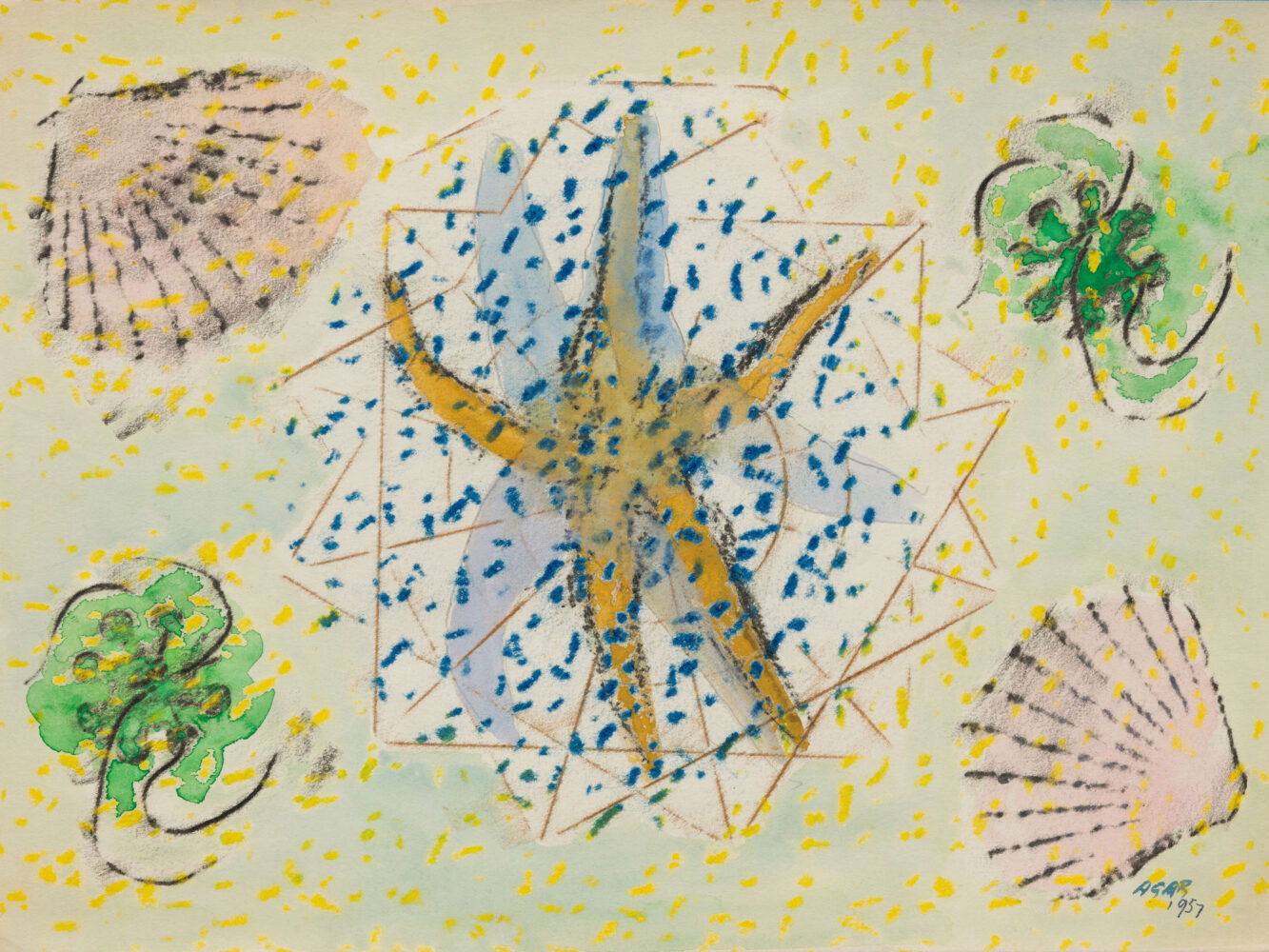
‘As Whitechapel Gallery’s ‘Angel of Anarchy’ retrospective makes clear, Eileen Agar never chose to be a surrealist. Rather, her work was chosen for the influential 1936 International Surrealist Exhibition at London’s New Burlington Galleries in 1936 by the artist Roland Penrose and critic Herbert Read, leading her into a lifelong association that has masked the complexities of her relationship with the movement. Spanning the artist’s 70-year career, ‘Angel of Anarchy’ situates Agar not just within British surrealism, which drew various talented female painters into its orbit, nor within French surrealism, with its notorious positioning of women as objects of fascination. Rather, it highlights her efforts to combine aspects of surrealism and cubism into a body of work that challenged the male dominance of both movements and was, above all, profoundly individualistic.’ […]