

The Delirious Optimism of Nicola L.
Alma Feigis, Elephant
February 2026

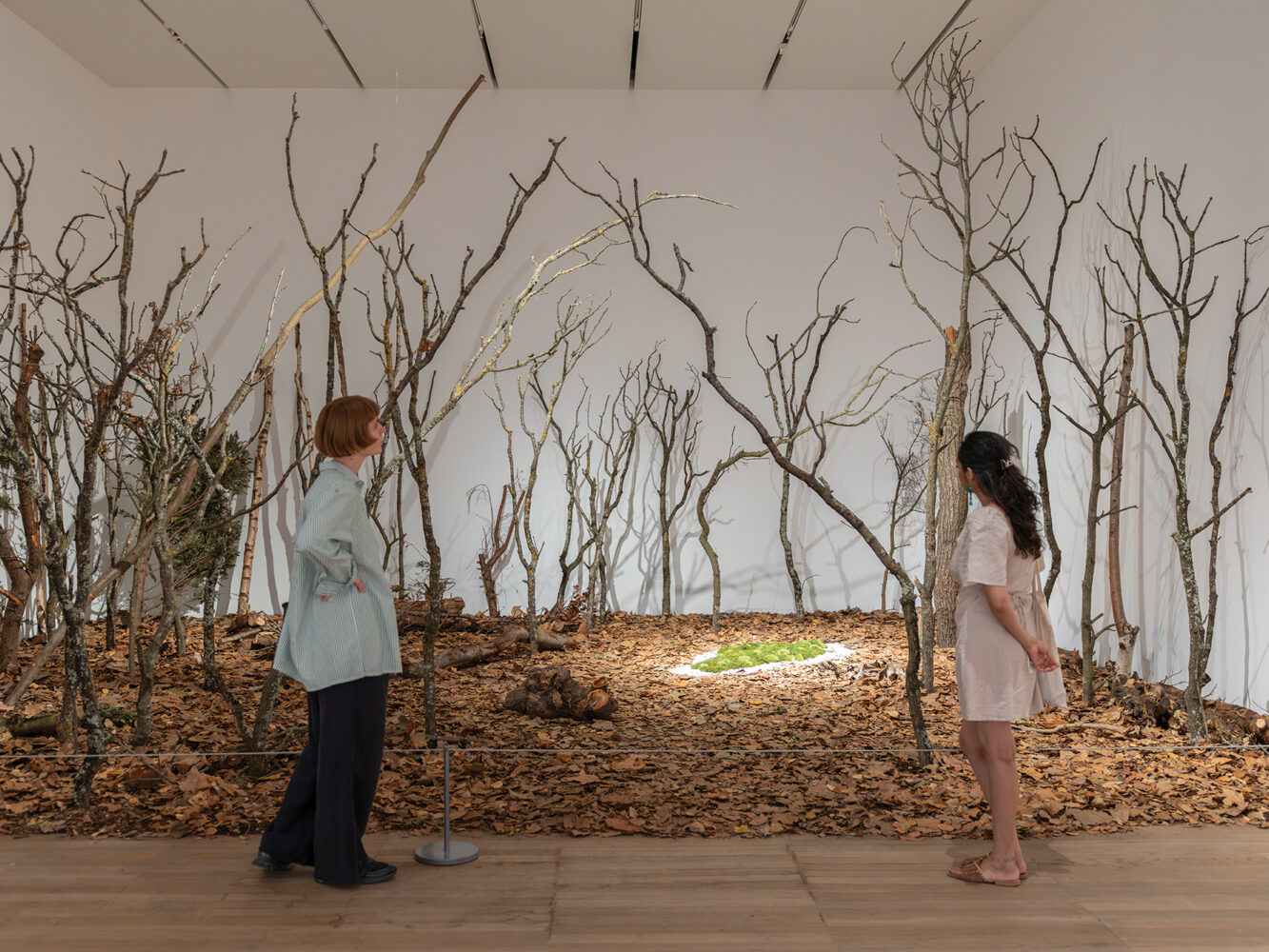
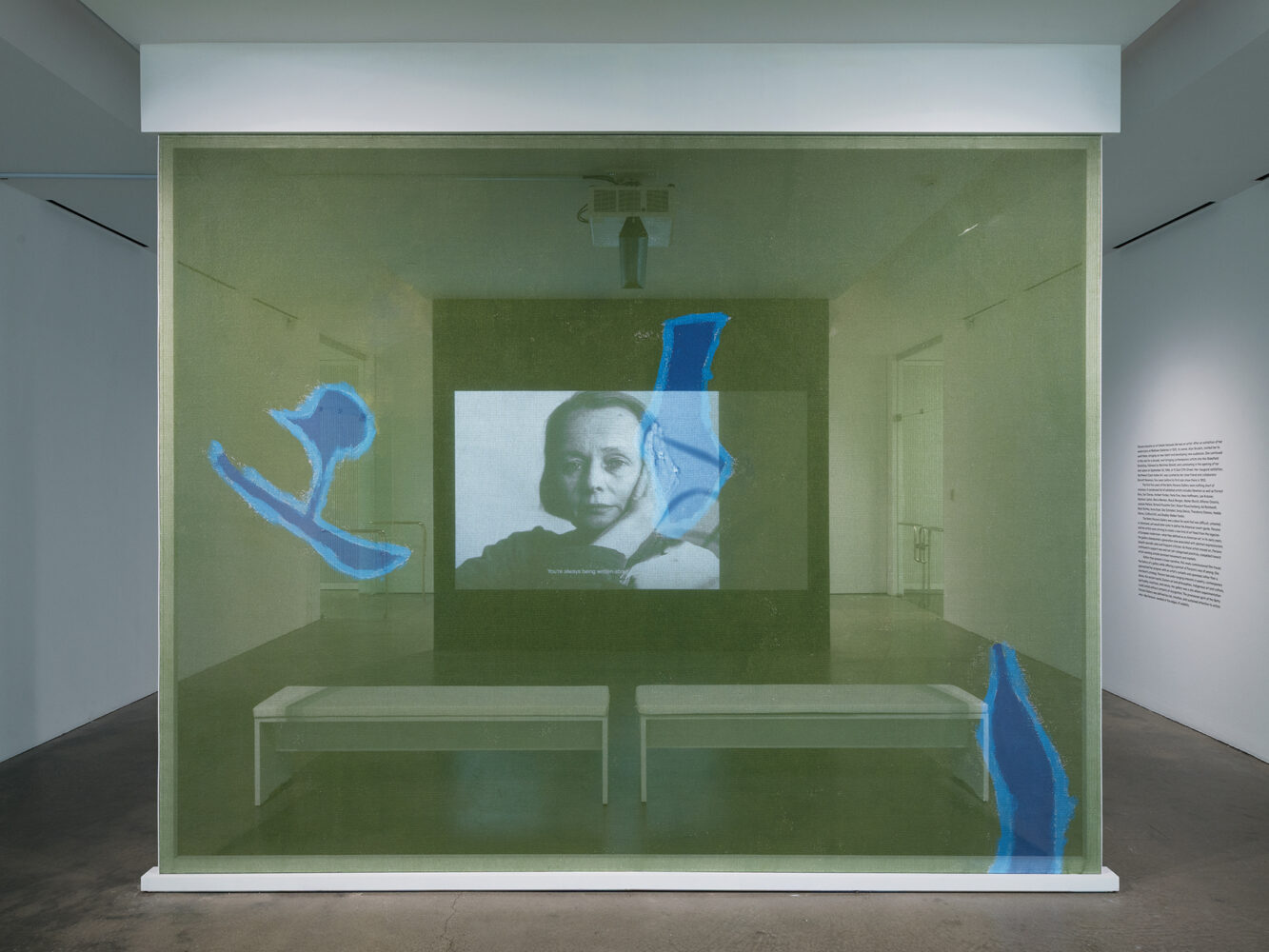
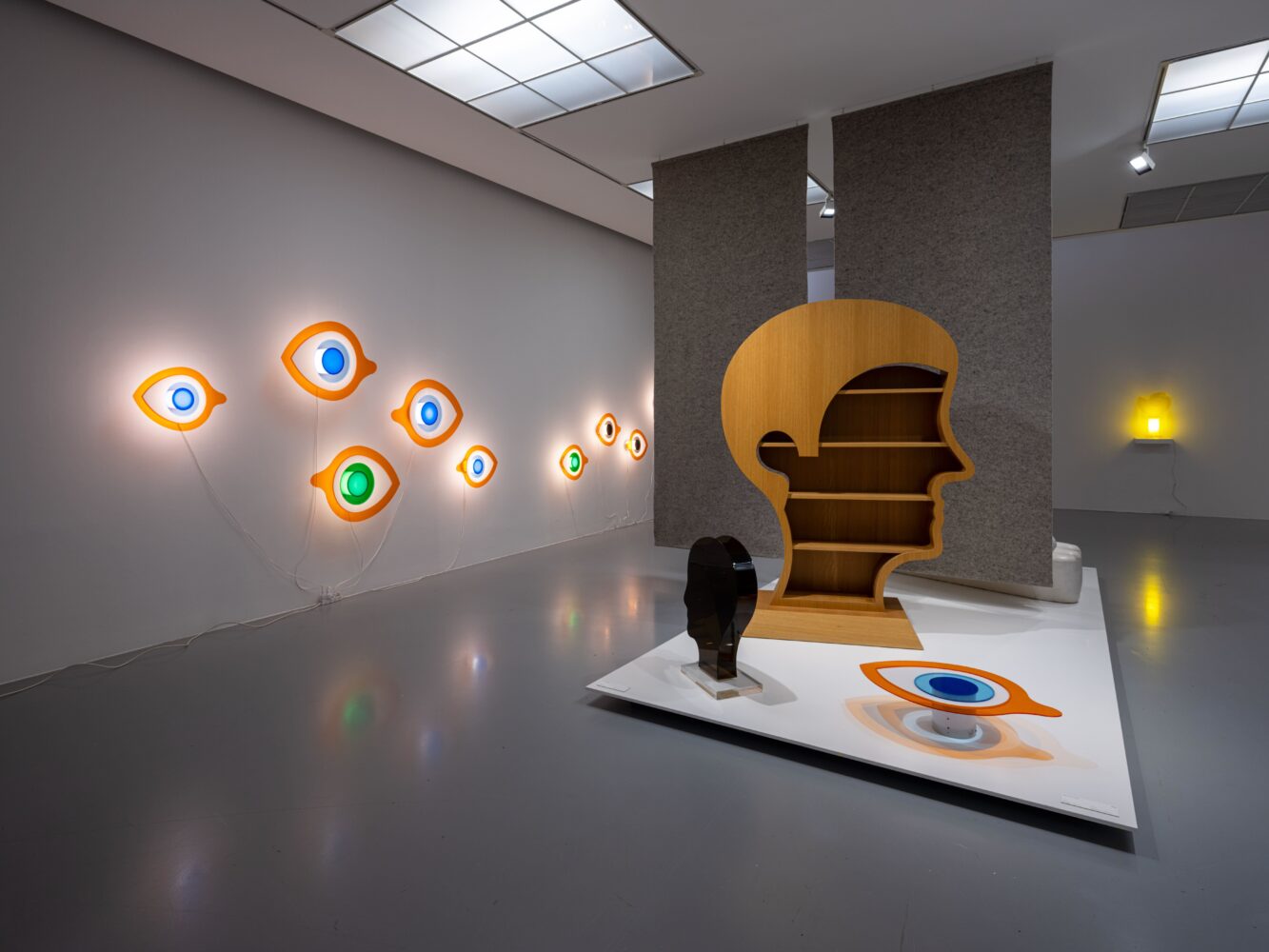
Bolzano’s Museion is not a home-like building, as far as art institutions go, but its rectangular, glass-faced, high-ceilinged galleries are – for the duration of their current retrospective of Nicola L. – softened and domesticated. The vast architecture of the exhibition spaces is broken apart by plywood panels and platforms washed with purple, orange, brown, and green hues, demarcating open, room-like spaces designed to house Nicola’s creations. An off-white leather couch in the form of a palm invites bodies to be cupped, eye-shaped lamps stare from the wall, bright and unblinking, while a clothing iron cast into a phallus sits blunt and immovable on its board just around the corner. “The work at first seems very playful and humorous, but then you discover their political dimensions, and a certain darkness behind them,” curator Leonie Radine tells me. “Nicola had this intention – she wasn’t just being a light, soft figure. At times, she was strategic, even emphasising and replicating the problem.” Femme Commode (1969), her unmistakable chest of drawers shaped like a woman’s torso with nipples for handles, borrows its French title from both “cabinet” and, as Nicola’s son tells me, a “convenient” or “easy” woman. […]