

Sagarika Sundaram: Reservoir
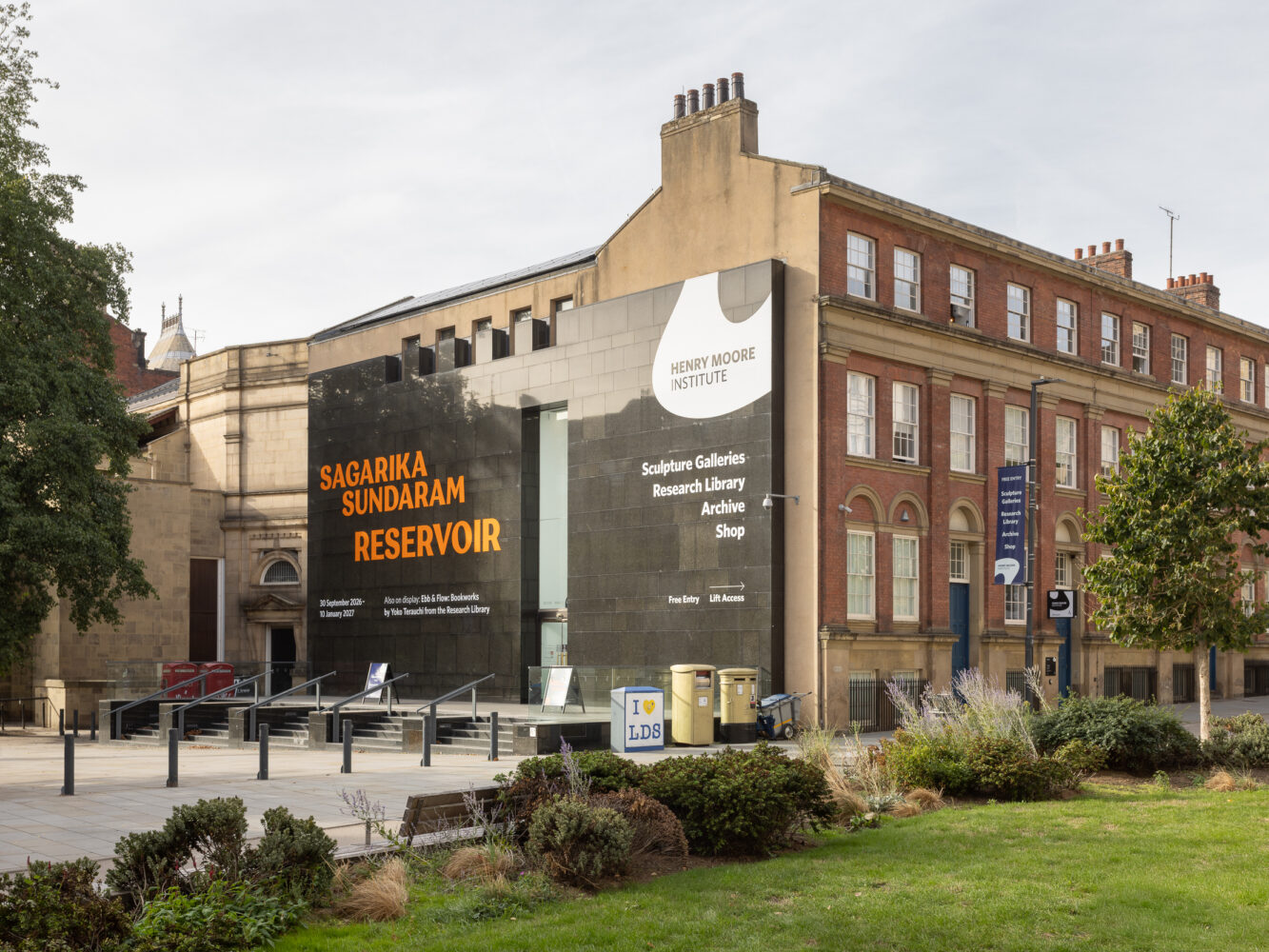
HENRY MOORE INSTITUTE, LEEDS: UNTIL 10 JANUARY 2027
30 SEPTEMBER 2026 – 10 JANUARY 2027

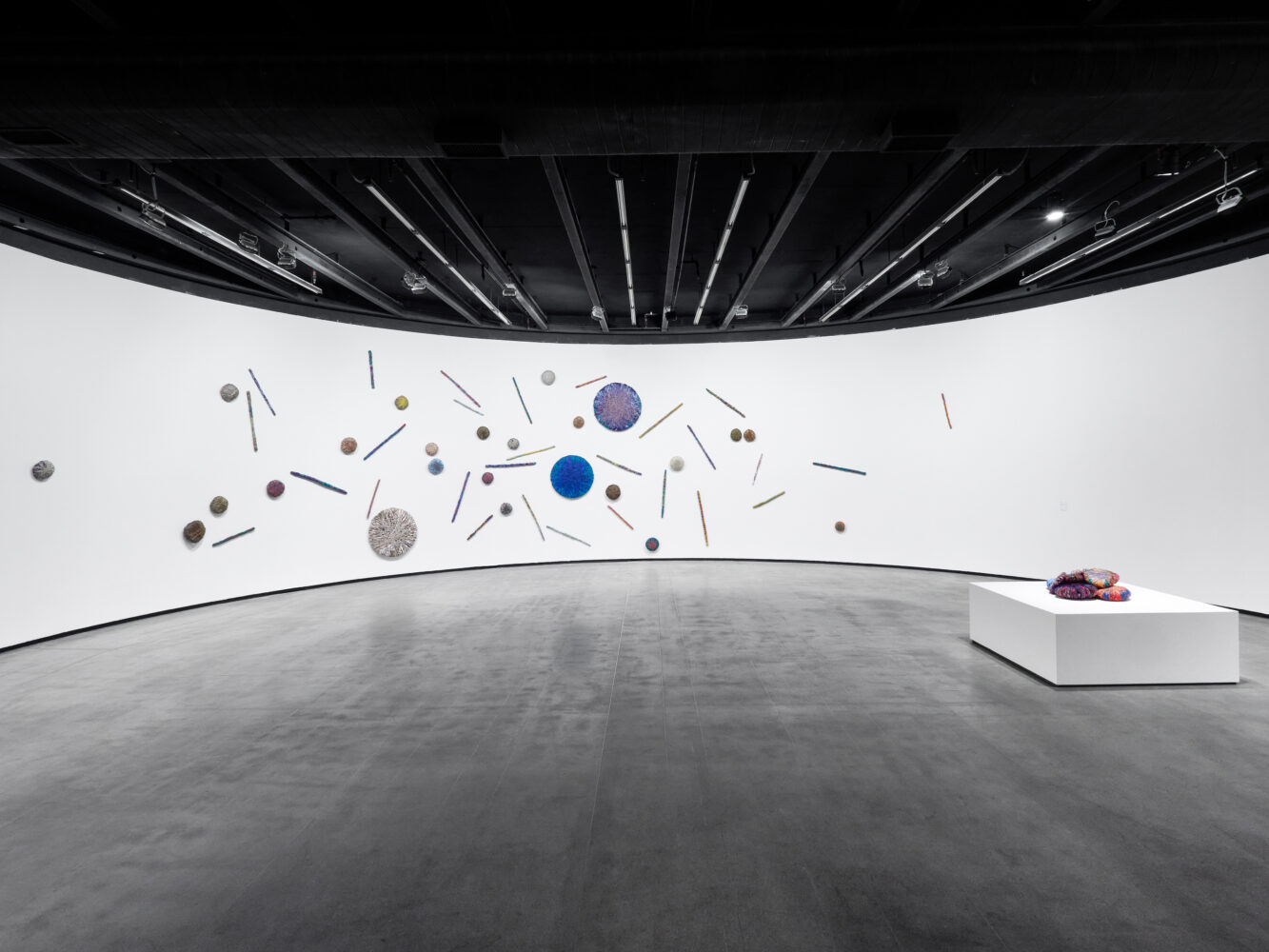
Sagarika Sundaram: Reservoir, the Henry Moore Institute, 2026. Courtesy of Alison Jacques and the Henry Moore Institute. Photography: Rob Harris.

Installation view, Sagarika Sundaram: Reservoir, the Henry Moore Institute, 2026. © Sagarika Sundaram. Courtesy of Alison Jacques and the Henry Moore Institute. Photography: Rob Harris.

Installation view, Sagarika Sundaram: Reservoir, the Henry Moore Institute, 2026. © Sagarika Sundaram. Courtesy of Alison Jacques and the Henry Moore Institute. Photography: Rob Harris.

Installation view, Sagarika Sundaram: Reservoir, the Henry Moore Institute, 2026. © Sagarika Sundaram. Courtesy of Alison Jacques and the Henry Moore Institute. Photography: Rob Harris.

Installation view, Sagarika Sundaram: Reservoir, the Henry Moore Institute, 2026. © Sagarika Sundaram. Courtesy of Alison Jacques and the Henry Moore Institute. Photography: Rob Harris.
Reservoir brings together an entirely new body of work by Sundaram, made especially for the exhibition. At its centre, Blue Mountain 2026 is a monumental sculpture stretching almost seven metres in length. Its expansive, undulating forms create cave-like spaces that visitors can move around, and almost within. Alongside it, Dancer 2026, extending from floor to ceiling, spirals in a form that is at once shell-like and animated, its sweeping movement giving physical expression to the energy suggested by its title.
A further sculpture reconstructs the process of rope-making, investigating how repetition, accumulation and twisting give one of humanity’s oldest functional materials new sculptural presence. Here, rope occupies a space between line, labour, utility and sculpture, extending its long history of use into a language of form. These works, and others, mark a significant moment in Sundaram’s practice following an extended period of research into material, colour and process.
Working with wool, Sundaram uses traditional, labour-intensive processes to compress loose fibres into felt. This approach foregrounds felt-making as a process of sculptural construction, through which dense forms are built through pressure, friction and manipulation. While soft, her works engage with fundamental sculptural concerns of volume, void, surface, texture, depth, space, scale and bodily experience.
Wool has long been essential to human life, providing warmth, clothing and shelter. Since sheep were first domesticated around 11,000 years ago, wool has existed between the home, the economic and the architectural, from the compressed felt of Central Asian yurts to the medieval wool trade that financed towns, monasteries and churches throughout Britain. Felt-making is one of the oldest methods of turning loose fibre into structure, likely predating woven cloth. Unlike woven fabric, felt has no warp and weft; instead, fibres bind together in every direction to create a dense, continuous mass with its own sense of strength, unpredictability and movement. In Sundaram’s work, this ancient, and yet everyday, technology of protection and enclosure becomes a contemporary sculptural language.
Transformation lies at the heart of Sundaram’s practice. Every sculpture is built through the repeated dyeing, layering and compression of wool before being opened to uncover the colours, spaces and forms concealed within. Nothing is added; the hidden interiors have always been present, waiting to be revealed. Incision becomes an act of excavation, opening seemingly complete forms into complex spatial realms.
Colour is integral to the construction of Sundaram’s sculptures, used to heighten their sense of structure and depth. Through dyeing, colour becomes embedded within the felt rather than applied to its surface. As the sculptures unfold, hidden strata generate space, atmosphere and volume, carrying the history of their making: accumulated labour, pressure and change held in reserve. These embedded layers give rise to forms that remain deliberately open, evoking flowers, seedpods, caves, shells, geological formations, bodies and architecture, and suggesting spaces that might be entered, inhabited or sheltered within.
Marking the first museum exhibition of Sundaram’s work, Reservoir reflects Henry Moore Institute’s ongoing commitment to artists who continue to test and expand the possibilities of sculpture. Through material, colour, scale and bodily encounter, Sundaram demonstrates how one of humanity’s oldest materials can become a compelling language for contemporary sculpture.